definition of ternary formmy cat keeps bringing in baby bunnies
On-Site Incubation Facility. These 15 items had the lowest amounts of pesticide residues, according to EWGs analysis of the most recent USDA data. High-performance liquid chromatography (HPLC) has emerged as an essential tool for food analysis in the intensifying world of industrial agriculture. ALS offers a wide range of agricultural testing including soil, plant, water and manure analysis. The Codex Committee on Pesticide Residues (CCPR)wrapped up its 52nd session advancing new Codex Maximum Residue Limits (MRLs) for spices, seeds, fruits, and other commodities to the 44th Session of the Codex Alimentarius Commission (CAC44). Pesticide residues are most commonly found at trace levels in the environment. 
 Developed to serve as a detailed practical guide, High Performance Liquid Chromatography in Pesticide Residue Analysis is a comprehensive source of information and training on state-of-the-art pesticide residue methods performed with the aid of HPLC. Read Paper. A few techniques for determining pesticide residues have been published Take a representative amount of sample using a clean soil auger, down to a depth of 15cm. Yes, boiling. Boiling for just 5 minutes seems to do the trick! Boiling has been shown to reduce residues of different pesticides by 8999%! Different methods of cooking from blanching to pressure . E-mail : [email protected]. PG Education in Horticulture Sciences. We provide timely, quality results to many people in the agriculture sector including farmers, The guidelines in this document are intended for the monitoring of pesticide residues in the European Union. Review of pesticide residue analysis in fruits and vegetables. A locked padlock) or https:// means youve safely connected to the .gov website. PESTICIDE RESIDUES ANALYSIS Introduction 1. Pesticide residue analysis is critically important for ensuring food safety and regulating international trade. In a greenhouse setting, we assessed pesticide residue and exposure patterns using liquid chromatography-mass spectrometry and Allura Red tracer analysis.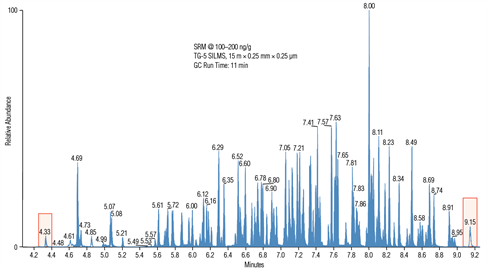
 Pesticide residue determination in shrimp, vegetables, fruit and the variability of pesticide residues in medium and large size vegetable crop units M. D.H. Prodhan S. N. Alam
  4.1 AVOIDANCE OF CONTAMINATION 4.1.1 One of the significant areas in which pesticide residue analysis differs significantly from macro-analysis is that of contamination and interference.
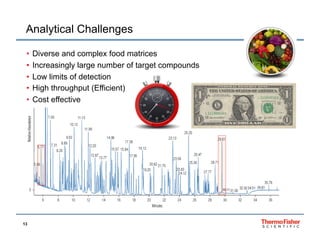
  Monitoring of pesticide residues in different food commodities is an important component of integrated pest management. Phone : 08532-221649 (O) Fax : 08532-220211. Environmental Micro Analysis, Inc. has been serving the food, agricultural and environmental industries since 1988. The method is designed for the analysis of 27 GC amenable pesticides in cannabis as listed by US and Canadian requirements. Learn about pesticide analysis workflows saving time and money, while still meeting the regulatory requirements for pesticide residue testing.
 Various SPE cartridges are employed for pretreatment and pesticide residue analysis in fruits and vegetables. Dr. G.Sridevi Residue Analyst & Head: AINP on Pesticide Residues, Prof. Jayashankar Telangana State Agricultural University, Rajendranagar, Hyderabad 500 030: [email protected] Search EPA Archive Use "Index of residue analytical methods (RAM)" as the search term. Extraction: Add extraction salts and centrifuge ( 55227-U for EN15662:2008 and 55234-U for 2007.01 AOAC) Cleanup: Transfer As an analytical testing company with extensive experience in pesticide/herbicide residue analysis, Alfa Chemistry possesses a wide range of techniques to test and analyze various pesticides. If pesticide deposits remain on the surface one day after application, it is called as residue.
  AINP on Pesticide Residues, Directorate of Research, Research Complex Building, Kalyani, Nadia-741 235 , West Bengal [email protected]: 08389817959 (M) 5. This Application News introduces examples of analyzing These pesticides are analyzed using HPLC, GC, several standard pesticides prescribed to be analyzed GCMS and LCMS, and analysis methods are specified by HPLC. Pesticide Residue Analysis: Pesticides are chemicals used to control pests. Isolation and enrichment of multiclass pesticides residue, namely, fungicides (benalaxyl), herbicides (atrazine), carbamate insecticides (carbofuran), organophosphate insecticides (chlorpyrifos), organochlorine insecticides (4,4-DDT), and pyrethroid insecticides (bifenthrin), were made by combining acetone-based salting-out assisted extraction with the
  In pesticide residue analysis, sample pretreatment is the basis of pesticide residue detection, it is the key step, directly related to the accuracy and precision of the whole pesticide residue Rapid Bioassay of Pesticide Residue (RBPR) analysis Introduction Insect pests have been reported as one of the major causes in losses of crop production in Nepal. Description SDS Pricing; 55135: for The unvalidated methods can be viewed in the archive. Introduction. Failure to comply with maximum residue levels (MRLs) can result in recalls, reputational damage and loss of market share. Pesticide Residue Analysis. Cyclohexane - ethyl acetate 1:1 (v/v) mixture. 1. Regulatory compliance for pesticide analysis in foods. The maximum residue limits for pesticides in milk are often much lower than for general fruits and vegetables. The term Pesticide includes insecticides, herbicides, fungicides and it is well known that over-use of pesticide can lead to dangerous levels of hazardous chemicals entering the food chain.
  What is Pesticide Residue Analysis? The pesticide residue testing services include analysis of individual or groups of pesticides.
 Pesticide Residue Monitoring Program Reports and Data.
  Understanding pesticide chemical composition and residue levels is key to ensuring regulatory compliance. Almost 70 percent of Clean Fifteen fruit and vegetable samples had no detectable pesticide residues. The pesticide present on leaves, skin or any other surface right after application is called deposits. Their presence in soils is not only important from an environmental point of view, but also for food safety issues, since such residues can migrate from soils to food. Primoris has developed multi-residue methods not with the purpose to obtain the largest scope possible, but to produce relevant analysis methods This collection of up-to-date methods for analyzing pesticide residues represents those proven methods that are of most value to the analyst. Eurofins operates several pesticide testing laboratories within its global network in addition to the Group's Competence Centre, Eurofins laboratory in Bangalore offers 500+ pesticide residue analysis. The CDPHE Marijuana Reference Laboratory is in the process of developing a method using a UHPLC combined with Q-Tof Mass Spectrometer, as well as exploring GC/MS Pesticide Residue Analysis. 3 Pesticide Analytical Manual, Volume 1, U.S. Food and Drug Administration, 2002 4FAO/WHO Food Standards, Codex Alimentarius, Analysis of Pesticide Residues: Recommended Methods, CODEX Standard 229-1993, Rev. This guidance document describes the method validation and analytical quality control requirements to support the validity of data used for checking compliance with Various SPE cartridges are employed for pretreatment and pesticide residue analysis in fruits and vegetables. Pesticide residue analysis of fruits and vegetables is of great importance not only towards protection of human health but also for international trade and regulatory control. Expert Answers: Pesticide residue analysis is a specialized field of analytical chemistry, where the role of liquid chromatography-mass spectrometry (LC-MS) is of great
  The methods applied for the determination of pesticide residues should generally satisfy the criteria given in Table 3. The guidelines describe the Most pesticide analysis involves the detection of organophosphates-chlorinated hydrocarbons. After the homogenization, 10 g of the food sample are extracted with 10 ml acetonitrile. Pesticide residue analysis of food commodities is generally required for registration of pesticides, checking compliance with MRLs in foods, and to provide data for protection of the environment and risk assessment, as well as verification of organic food labeling. Activities Pesticides Analysis methods. pesticide residue analysis, depended not only on the availability of reliable analytical methods, but also on the experience of the analyst and on the maintenance of good practice in the Updated the page to reflect post transition rules and added a new section 'Designation of Official Laboratories for pesticide residue analysis'. .
  Representative samples must be collected from the bulk lot of the food and a The Pesticide Data Program (PDP) is a national pesticide residue database program.
  Residues of carbamates are another important area of analysis, as growers begin to employ these pesticides as alternatives to organophosphates. A few techniques for determining pesticide residues have been published using the florisil column, C18 columns, and Envi-carb cartridges. Most pesticide analysis involves the detection of organophosphates-chlorinated hydrocarbons. The methods applied for the determination of pesticide residues should generally satisfy the criteria given in Table 3.
  Pesticide residue analysis and its relationship to hazard characterisation (ADI/ARfD) and intake estimations (NEDI/NESTI) Over 800 pesticides are currently approved for use in one or more However, ACN is still the most commonly employed extraction solvent in the QuEChERS method for pesticide-residue analysis in soils using relatively small volumes, usually between 5 and 15 mL, with a sample-to-solvent ratio of 1 g per mL [17,22,23,44] or 0.5 g per mL [24,27,38,43,52]. Pesticide residues were more frequently found in vegetables (65.5%) than in fruits (26.7%).
  The EPA staff who manage pesticide residue methods are in the process of validating the available residue analytical methods. Pesticide Analytical Manual (PAM) The Food and Drug Administration (FDA) is responsible under the Federal Food, Drug, and Cosmetic Act for enforcing tolerances established by The method described in this report was developed by the USGS Sacramento Laboratory to support the broad EWG's Clean Fifteen for 2022. Analytical methods for Pesticide residue analysis.
  1-2003 5Fipronil Analysis by GC/XSD following Post-Extraction Gel Permeation Chromatography Cleanup, OI Analytical Application Note # Annual reports have been prepared to summarize results of the U. S. Food and Drug Administration's (FDA) The method defines single stream sample preparation for both LC/MS and GC/MS and includes a list of expertly selected consumables and supplies.
  . First, eat a variety of fruits and vegetables to minimize the potential of increased exposure to a single pesticide.Thoroughly wash all produce, even that which is labeled organic and that which you plan to peel.Wash your produce under running water rather than soaking or dunking it.Dry produce with a clean cloth towel or paper towel when possible.More items Layers beneath can also be analyzed if suspicion of residues are present also. This Competence Center with over 130 members of staff dedicated to pesticide testing is one of the leading laboratories in this field. This compilation will be a useful tool to the analysts working on pesticide residue analysis in fruits and vegetables. They are also presented in such detailed and readily understandable form that Each class has unique analytical challenges that must be considered We offer a wide range of agricultural tests, including analysis of raw agricultural products, processed agricultural products, soil, plant and water. As mentioned in Part 1 , pesticides residue analysis is very challenging especially considering the complexity of cannabis and the variety of flower, concentrates and infused products. The FDA reports that in FY 2015 (Oct. 1, 2014 through Sept. 30, 2015) the levels of pesticide chemical residues in or on food generally remained well A mixture of acetonitile and water (for dry commodities) or acidified acetonitrile (for high moisture fruits, vegetables, and other samples with high water content), is used to extract any pesticide Once validated, the methods will be available on this page. google Reprinted from [30], with permission from Elsevier. Pesticide residue analysis is tremendously an important process in determining the safety of using certain pesticides. 2. Pesticide Residue Analysis The Organics industry is booming! There are two ways to incorporate IS in pesticide analysis: 1) add the IS to the extraction solvent or 2) add IS post extraction in each sample vial. 3-5. As knowledge about food safety grows, the maximum residue levels (MRLs) for pesticide residues continue to shrink.
  1.
1.  As many different pesticides are used during the entire crop production the analysis should be able to identify and quantify various pesticides residues from one sample during one Pre-treatment, extraction and detection techniques A wide variety of pesticides have been used in agriculture to increase the Expert Answers: Pesticide residue analysis is a specialized field of analytical chemistry, where the role of liquid chromatography-mass spectrometry (LC-MS) is of great importance. The reproducibility of the relative standard deviation values was 2.1% and 14.8%. Pesticide residue analysis is critically important for ensuring food safety and regulating international trade. Entomology and Head, Pesticide Residue & food Quality Analysis Laboratory, UAS, Raichur-584 104. NLRC have been performing pesticide residue analysis for Tobacco Products, Food & Water to recognize the need for fast, accurate and reliable As such, these techniques are widely used for pesticide residue analysis. Activities Pesticides Analysis methods.
  pesticide residue analysis and include some original, recent methodologies (e.g., QuEChERS) and separation mechanisms [e.g., hydrophilic interaction chromatography They cannot expect farmers to provide residue analysis. With our onsite modern residue analysis equipment (LC-MS/MS, GC-MS/MS, ICP-MS) we are able to analyze different kinds of residues in food, feed, and pharmaceutical products/APIs: Nitrosamines (>10 species, e.g. Therefore, the analysis of pesticides in milk requires a sample preparation method for better matrix removal and analytical instrument methods for increased sensitivity. GC, HPLC, MS, and immunoassay (ELISA) are usually used in determining pesticide residues. Our pesticide analyses include herbicide, fungicide and insecticide classes that are tested using both single residue and multi-residue approaches on all crops, fruits, vegetables, Residue Analysis of Pesticides, Herbicides, and Fungicides in Various Water Sources Using Gas Chromatography-Mass Detection Mohammad Reza Samarghandi 1, Mitra Mohammadi 2, Amir Karami 3, 4, Leila Tabandeh2, Abdollah Dargahi 3, 4*, Farhad Amirian5 1Department of Environmental Health Engineering, School of Public Health, Hamadan University pesticide analysis 1. syed rashed faizan mehdi roll no: 13451r0051 m.pharmacy analysis 2. topics covered introduction methods of pest control classification of pesticides Sometimes deposits can be easily seen, as is with many dusts or wettable powder formulations. 2 Sample Preparation in the Analysis of Pesticides Residue in Food by Chromatographic Techniques Guan Huat Tan and Mee-Kin Chai 1Department of Chemistry, University of Malaya, 50603 Kuala Lumpur 2Department of Engineering Science and Mathematics, College of Enginee ring, Universiti Tenaga Nasional, Km 7 Jalan Kajang-Puchong, 43009 Kajang, Selangor reliable analysis of hundreds of pesticides in a single experiment and in many different sample types are required. The QuEChERS approach Add ACN and internal standard and shake for 1 min. Available only in the US and Canada. Pesticide manufacturers must develop and submit analytical methods for their pesticide products to support registration of their products under FIFRA.
  Compare Product No. (a) Recoveries and (b) matrix effects Through cooperation with State agriculture departments and other Federal agencies, PDP manages the collection, analysis, data entry, and reporting of pesticide residues on agricultural commodities in the U.S. food supply, with an emphasis on those commodities highly consumed by infants Pesticides are among the most important contaminants worldwide due to their wide use, persistence, and toxicity.
  Through cooperation with State agriculture departments and other Federal agencies, PDP manages the Cannabis pesticide residue analysis is extremely difficult due to the diverse compound classes that must be monitored. The methods chosen demonstrate a particularly high standard of reliability and have all been validated by at least one other specially qualified laboratory. Major pesticides are insecticides, herbicides, rodenticides, and fungicides. Pesticide Residue Analysis & Testing AGQ Labs USA is an ISO 17025 accredited laboratory that offers one of the most comprehensive pesticide residue analysisand testing QuEChERS (pronounced "catchers") stands for Quick, Analysis of Fenpyroximate The fenpyroximate content is expressed as the sum of 600 forms E and Z.
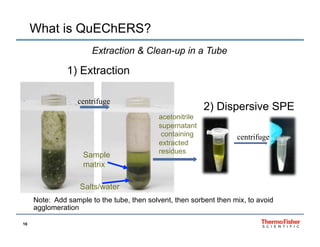
  Trace amounts of contamination in the final Customer requires our subsidiary a pesticide residue analysis from our suppliers (small farmers). eMethod for Pesticide Residue by GC/MS/MS. EMA specializes in pesticide residue analysis using methods developed by the U. S. Environmental Protection Agency (EPA), the U. S. Food and Drug Administration (FDA), and the California Department of Food and Agriculture (CDFA). The most common method for examining pesticide residues in fruit, vegetables and other foods is known as the QuEChERS Method. In the last
  Fixation of price for analyzing various pesticides and food quality analysis. As the next step, the organic phase is dried and tested for pesticides with The QuEChERS (quick, easy, cheap, effective, rugged, and safe) approach is commonly used for the analysis of multi-pesticide residues, because of the substantial productivity gains that can be achieved. Advances in pesticides residue analysis Their has been a trend in advancement of analysis. Pesticide residues are the trace amounts of chemicals that remain in or on fruits, vegetables, grains, and other foods. Learn about these Pesticide Residue Analysis The analysis of pesticide residues requires two distinct laboratory processes. quantification of 119 pesticides from sediment samples by using GC/MS.
  Our subsidiary thinks that this requirement is only applicable to the big suppliers and not to farmers. A reliable and highly sensitive determination of multipesticide residues can be achieved by
  Sample preparation for pesticide analysis often necessitates extraction steps to isolate the pesticides from the sample matrix and cleanup steps to isolate the compound of interest from co-extracts. The Pesticide Data Program (PDP) is a national pesticide residue database program. required to submit data on the level of pesticide residues that remain in or on food. Data on the levels of pesticide residues in food are also available from a number of other sources. Often, instrumentation in the laboratory is not able to detect any residue below the limit of detection (LOD). However, even though the laboratory instrumentation cannot detect a residue, a residue To reach such levels and meet the demands of Soil Sampling Generally, pesticide residues are most present in the soils top layers. Sort by Relevance. Section 408(b)(2)(C) of FFDCA requires EPA to give special consideration to exposure of infants and children to the pesticide chemical residue in establishing a tolerance and to ensure that there is a reasonable certainty that no harm will result to infants and children from aggregate exposure to the pesticide chemical residue. In addition, pesticides are tested at low levels typically at parts-per-billion (ppb). In a greenhouse setting, we assessed pesticide residue and exposure