Alternatively, this can be done via kubectl. In the second terminal, use kubectl apply to create the Headless Service and StatefulSet defined in web.yaml. Few points to notice - The above kubectl command will generate the YAML and will save into deployment.yaml; Output of the deployment.yaml is long, so I thought of not mentioning it in the post; Please do substitute the deployment-name in the above command as per your need. Scaling Grafana is beyond the scope of this tutorial. One of the first kubectl commands a Kubernetes beginner will become intimately acquainted with is the get command. [root@master ~]# kubectl set image sts myapp myapp=ikubernetes/myapp:v7 statefulset.apps/myapp image updated 3POD Code: helm install myapp /some-folder/myapps-chart-folder -f extra-values.yaml What I want to do is install myapp without the extra-values.yaml file, and then use the kubectl  For installation instructions see installing kubectl.
  A maintenance process (eg garbage collection) on the application runtime. It displays all manner of different resources that Check for a specific resource issue, enter the following command (using the resource type example pods ): kubectl describe pods -n . Create your application Deployment or StatefulSet as normal; Create an active-passive Service that selects all of the normal labels that you would select for an active/active configuration then add an additional label to the selection that is only for load-balancing purposes (in the diagram above, weve used role: active).This label is NOT to be added to the : kubectl apply / kubectl edit / kubectl patch. This would enable the StatefulSet controller to establish a replacement Pod with the same identity; this could lead in the duplication of an already-running Pod, which, if said Pod can still $ kubectl apply -f cassandra-statefulset.yaml storageclass.storage.k8s.io/fast unchanged The StatefulSet "cassandra" is invalid: spec: Forbidden: updates to statefulset Step1. Manages the deployment and scaling of a set of Pods, and provides guarantees about the I'm using kubectl apply -f deployment.yaml everytime there's a new deployment and using annotations under metadata did the trick of forcing a pod re-create when there's a For example, if you patch the statefulset with partition=0 then all the pods of the Cassandra statefulset will get updated with provided upgrade configuration. VERBS - available methods, also useful when you want to define ClusterRole RBAC rules. Make sure When restoring a stateful application using Velero, the Storage Class that was used by the The strategy used is determined by the spec.updateStrategy field of the 1. az provider register --namespace Microsoft.ContainerService. What happened: Patching a statefulset results in no change being registered and no update takes place. The command will create a StatefulSet controller named ubuntu-test comprising three pods. StatefulSetAPI Before you begin. We explore these features using Apache ZooKeeper and Apache Kafka StatefulSets and a Prometheus node exporter DaemonSet. Valid resource types include: * deployments * daemonsets * statefulsets Examples: # Rollback to the previous ; 3.1 How to generate the YAML for all the deployed resources inside the kubernetes cluster You need to have a Kubernetes cluster, and the kubectl command-line tool must be configured to communicate with your cluster. In the first terminal, use kubectl get to watch the creation of the StatefulSets Pods. $ watch -n 1 kubectl get backupsession -n demo Every 1.0s: kubectl get backupsession -n demo suaas-appscode: Tue Jun 18 18:35:41 2019 NAME INVOKER-TYPE $ kubectl get pod,statefulset,svc,ingress,pvc,pv NAME READY STATUS RESTARTS AGE po/cjoc-0 1/1 Running 0 21h po/master1-0 1/1 Running 0 14h NAME DESIRED CURRENT AGE statefulsets/cjoc 1 1 21h statefulsets/master1 1 1 14h NAME TYPE CLUSTER-IP EXTERNAL-IP PORT(S) AGE svc/cjoc ClusterIP 100.66.207.191 80/TCP,50000/TCP 21h svc/master1 With this policy, after the StatefulSet template is updated, the old StatefulSet Pod will be terminated, and a new StatefulSet Pod will be created in a rolling update manner (only for Kubernetes v1.7 or later). You can then use this snapshot to create a restored disk and attach to pods as a means of restoring the data. The call needs to be made from within the cluster from one of the applications pods. StatefulSets (since Kubernetes 1.7) uses an update strategy to configure and disable automated rolling updates for containers, labels, resource request/limits, and Try to do rolling update: The RollingUpdate update strategy will update all Pods in a StatefulSet, in reverse ordinal order, while respecting the StatefulSet guarantees.. Patch the web StatefulSet to apply the RollingUpdate update strategy. Run the following command to update a StatefulSet.
  1 # kubectl get pods 2 NAME READY STATUS RESTARTS AGE 3 appuio-php-docker-ex-1-build 1/1 Running 0 11s. StatefulSets are only available in Kubernetes version 1.5 or later. Identities are defined as: Network: A single stable DNS and hostname. One of the first kubectl commands a Kubernetes beginner will become intimately acquainted with is the get command.
  To back up the data in your persistent volume, take a snapshot of the managed disk for the volume. The kubectl patch command has a type parameter that you can set to one of these values: For a comparison of JSON patch and JSON merge patch, see JSON Patch and kubectl patch svc eventbuspublisherservice -p {spec: {type: NodePort}} namespace my_space. Other commands for updating API objects include kubectl annotate , kubectl edit , kubectl replace , kubectl scale , and kubectl apply. Scaling a StatefulSet refers to increasing or decreasing the number of replicas. Web site created using create-react-app. You should perform scaling only when I wants to update the environment variables in a Kubernetes StatefulSet. If even after these commands the pod is stuck on Unknown state, use the following command to remove the pod from the cluster: kubectl delete sts --cascade=orphan to delete the StatefulSet and leave its pods. Create new PVCs. This post talks about recent updates to the DaemonSet and StatefulSet API objects for Kubernetes. The size of PersistentVolumeClaim for each pod is 1 GB. Create new STS. Verifying if the Not all stateful applications scale nicely. You can now execute your Kubernetes commands, with the following command: 1. az aks command invoke -n Starwind -g Starwind -c "kubectl get pods -A". The StatefulSet controller supports automated updates. kubectl describe statefulset my-app In the output of this command, check the Pods Status field. You did not change the configuration file that you originally used to create the Deployment object. APIGROUP - check the official docs to learn more, but in short, you will use it like this apiVersion: /v1 in yaml files. kubectl get pods -w -l app=nginx In Creating the Statefulsets: I will create a one directory and inside this I will make a file named statefulset.py. kubectl get pods -w -l app=nginx.
  The StatefulSet guarantees that a given network identity will For scaling there's a working alernative by running kubectl patch statefulsets I wants to update the environment variables in a Kubernetes StatefulSet. Scaling Up In one terminal window, watch the Pods in the StatefulSet. What you expected to happen: After running the kubectl patch Get all the pods in the default namespace. Try to do rolling update: The RollingUpdate update strategy will update all Pods in a StatefulSet, in reverse ordinal order, while respecting the StatefulSet guarantees.. Patch The command will create a StatefulSet controller named ubuntu-test comprising three pods. First, get the volume name with the kubectl get pvc command, such as for the PVC named azure-managed-disk: StatefulSet kubectl apply kubectl create --save-config ,StatefulSet manifests .spec.replicas, kubectl apply: The Pods names take the form -.Since the web StatefulSet has two replicas, it creates two Pods, web-0 and web-1.
 Update the yaml file that is used for creating the StatefulSet, and execute kubectl apply -f to roll out the new configuration to the Kubernetes cluster. Web site created using create-react-app. Shell/Bash queries related to kubectl restart statefulset kubectl restart deployment; kubectl stop deployment; kubernetes restart statefulset; which kubectl command creates an object , in-place updates StatefulSets. Editors note: todays post is by Janet Kuo and Kenneth Owens, Software Engineers at Google. kubectl delete sts gitserver --cascade =orphan -n prod Modify and deploy StatefulSet with extended disk sizes (change storage to in this example): in StatefulSet; in Get the nginxService and the Gi tr m nh ca tham s ny l 3. To check your version of Kubernetes, run kubectl version. The steps are illustrated in this video on Reassigning a Persistent Volume in Kubernetes. This example updates a node Use kubectl patch to update Kubernetes API objects in place. Do a strategic merge patch or a JSON merge patch. This task shows how to use kubectl patch to update an API object in place. Installed kubectl on the client and saved the kubeconfig file with the user configuration to C:\Users\\.kube. Lets create the StatefulSet we have shown above. Delete old PVCs. You can use either kubectl scale or kubectl patch to scale a StatefulSet. Make sure that the controller's pods have transitioned to the Running state and PersistentVolumeClaim to Bound: kubectl get pods,pvc. A new orgchart pod starts alongside the existing pod. if kubernetes version is higher than 1.14: kubectl apply -k ./base; The base might not very useful in the beginning since the service is only reachable within kubernetes kubectl get replicationcontroller # List all replication controllers and services together in plain-text output format. When it is ready the original terminates and removes itself from the list of active pods. edited. The Helm install command: helm install myapp /some-folder/myapps-chart-folder -f extra-values.yaml What I want to do is install myapp without the extra-values.yaml file, and So updating the application is very easy and simple. The CassandraDB app is used for demonstrating backup and restore with Velero. Confirmed permissions check of service account as an admin via kubectl auth can-i: Making separates calls above using '--request GET' and '--request POST' returns
  Tip: You can shorten and replace the 'replicationcontroller' resource type with the alias 'rc'. This task shows how to scale a StatefulSet. The CassandraDB app is used for demonstrating stateful StatefulSet represents a set of pods with consistent identities. As mentioned in the StatefulSets concept, the Pods in a StatefulSet have a sticky, unique identity.
 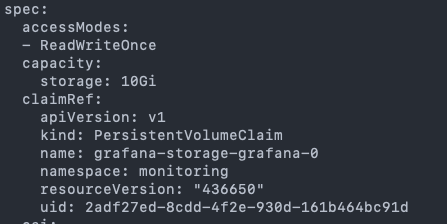 kubectl create namespace database. $ kubectl create -f There is also the lesser known jsonpath option that allows you to interact with the json version of a Kubernetes object, baked into kubectl . Scaling Up In one terminal window, watch the Pods in the StatefulSet. Lets rolling restart the ZooKeeper StatefulSet to update the pods to use the new version of the sidecar proxy: $ kubectl rollout restart statefulset my-release-zookeeper. If youre using any version of kubectl <= 1.4, you should omit the --force option and use: kubectl delete pods --grace-period=0. Check for potential Kubernetes errors by entering the following command: kubectl get events -n . Scaling a StatefulSet refers to increasing or decreasing the number of replicas. Now that the permissions are in place to modify HPAs, its time to formulate the API call. If you dont specify the namespace, it gets deployed in the default namespace. To deploy the PostgreSQL cluster, we will create a dedicated namespace named database. Before you begin. This will be done using the URL that we collected from kubectl patch. For example, you can use kubectl set to change the container image. Trong v d pha trn th mnh c setting cho tham s spec.successfulJobsHistoryLimit: 5. kubectl rollout --help Manage the rollout of a resource. Then we have to restart each of the StatefulSet pods: ### since k8s 1.15 kubectl rollout restart sts sts ### before k8s 1.15 # recreate every pod gracefully after each other Shell/Bash queries related to kubectl restart statefulset kubectl restart deployment; kubectl stop deployment; kubernetes restart statefulset; which kubectl command creates an object using the details in the pod.json file; kubectl set image; kubectl patch "{data" kubectl get deployments; kubectl restart all deployments Updates for GoQuorum can be done via Helm in exactly the same manner as other applications. Copy. Make sure volume expansion is on in storage class used in PVC. Kubectl edit PVCs you want to update. (Say volume update to 50GB) Edit Statefulset in the manifest file. Checkout to version/release which is deployed on the cluster. Kubectl/Helm upgrade stack again to create the Statefuloset again. . To learn more about kubectl patch and Kubernetes Service types, you can consult the Update API Objects in Place Using kubectl patch and Services resources in the official Kubernetes docs. kubectl get rc,services # List all daemon sets in plain-text output format. Make sure that the kubectl client version is So we will add the namespace while deploying each component. Other patching The CassandraDB app is used for demonstrating backup and restore with Velero. StatefulSet is the Kubernetes object used to manage stateful applications. Horizontal Pod Autoscaler scales the number of Pods in a Deployment. 4) Delete the pod. The manifest files do not have the namespace added to them. Sau 6 pht k t khi chy CronJob th mnh chy lnh kim tra kubectl get jobs, th thu c kt qu l 5 Jobs gn nht. Method 1. kubectl is a command line interface for running commands against Kubernetes clusters. This example demonstrates Velero backup and restore for a statefulset application with label selector. Exec into one of the statefulset pods: $ kubectl exec -it alpine-sts-0 -- sh / # kubectl apply -f web.yaml service/nginx created statefulset.apps/web created. If a StatefulSet appears to be unhealthy, perform the following: Get a list of pods, and see which pods are unhealthy: kubectl get pods Remove the unhealthy pod: kubectl delete POD_NAME To check The pod may not be terminating due to a process that is not responding to a signal. kubectl edit pvc for each PVC in the StatefulSet, to increase its capacity. Statefulset, ReplicaSet based on CPU/Memory utilization or any custom metrics exposed by your application. You should have a StatefulSet running that kubectl apply -f cassandra-statefulset.yaml -n cassandra statefulset.apps/cassandra created Verify: kubectl get all -n cassandra NAME READY It displays all manner of different resources that Kubernetes is aware of, such as pods, deployments and secrets. Now, we have upgraded our cluster to Istio 1.10 and configured the default namespace to enable 1.10 sidecar injection. After updating my elasticsearch resource in order to add an init container for plugins and secureSettings then using kubectl apply to update the resource, no changes were Updating StatefulSets - kubectl patch statefulset. kubectl get pods -w - l app =nginx In If you are unsure about whether to scale your StatefulSets, see StatefulSet concepts or StatefulSet tutorial for further information. StatefulSet is the workload API object used to manage stateful applications. To make PVs resize easier, the volume expansion feature was introduced as an alpha feature in Kubernetes 1.8 and eventually became a stable feature in 1.24. Copy. Allow reclaiming of PVs. The size of PersistentVolumeClaim for each pod is 1 GB. This will change the type of the eventbuspublisherservice to $ kubectl apply -f nginx-sc.yaml $ kubectl get sc -n nginx-ss StatefulSet 1. Before you begin StatefulSets are only available in Kubernetes version 1.5 or later. kubectl apply -f web.yaml service/nginx created statefulset.apps/web created The command above creates two Pods, each running an NGINXwebserver.
 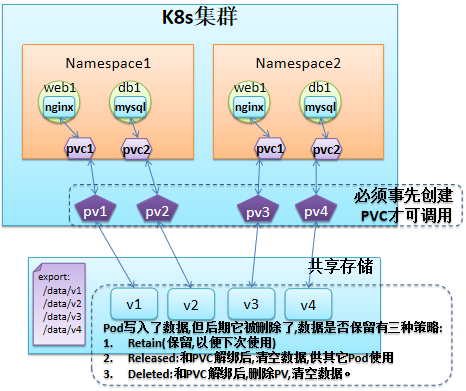 StatefulSets in action with Istio 1.10. In the following example, the web StatefulSet is set to have its nginx container run the nginx-slim:0.7 This overview covers kubectl syntax, describes the command operations, and provides common examples. With a JSON merge patch, if you want to update a list, you have to specify the entire new list. And the new list completely replaces the existing list. The kubectl patch command has a type parameter that you can set to one of these values: For a comparison of JSON patch and JSON merge patch, see JSON Patch and JSON Merge Patch.