
cambridge vs luton predictionmy cat keeps bringing in baby bunnies
 1 Physiology of Body Fluids PROBLEM SET, RESEARCH ARTICLE Structure & Function of the Kidneys Renal Clearance & Glomerular Filtration PROBLEM SET RltifRlBldFlREVIEWARTICLE Renal Physiology - Lectures Regulation of Renal Blood Flow - REVIEW ARTICLE Transport of Sodium & Chloride TUTORIAL A & B 6. The renal tubules help regulate the osmolality, volume, and pH of the blood.
  When you stretch a smooth muscle cell, it contracts; when you stop, it relaxes, restoring its resting length. Kidney Functions Regulation of water, electrolyte balance, pH Removal of waste from blood and excretion of urine. Dialysis: how and why? The glomerulus is nestled inside a cup-like sac located at the end of each nephron, called a glomerular capsule. The kidneys play a central role in the regulation of arterial blood pressure. Nephons and their blood supply. sharonr41. Our tissues produce around 300 milliliters of water per day through metabolic processes. Changes in the kidneys that occur with age: Amount of kidney tissue decreases and kidney function diminishes. Renal Function Excretory Functions Formation and excretion of urine Glomerular filtration Tubular reabsorption Tubular secretion Excreting toxic substances in synergy with liver Homeostatic function Regulation of blood volume Regulation of blood pH Regulation of serum electrolytes; Na, K, Cl and Ca Stage 1 CKD: Mild kidney damage, eGFR 90 or higher. Total water output per day averages 2.5 liters. As the human kidneys PowerPoint diagram demonstrates, their primary function is to remove the waste products in the blood which in turn are sent through the ureter tubes that are connected to the bladder. Blood volume - by filtering blood, excreting or reabsorbing water from body as needed (influenced by hormones __________, ___________, & ___________) 2. instances, the kidney retains sodium secondarily as a result of an actual or sensed reduction in effective circulatory volume. Renal Acid-Base Regulation Kidneys help regulate blood pH by excreting H+ and reabsorbing HC03-. The RAAS Renin Release.
 Functions of Kidney Urine formation Regulate body fluid, osmolality and volume Regulate electrolyte balance Regulate acid-base balance Excrete waste products and foreign substances Produce and excrete hormones Urine Formation Removal of potentially toxic waste products 3 processes involved Filtration, Reabsorption, Secretion Overview The urinary system consists of the kidneys, ureters, urinary bladder, and urethra. What are the clinical qualities we associate with urine? The physiological role of the kidney in the regulation of fluid homeostasis and blood pressure is well characterized [1]. Specifically, it acts in the distal convoluted tubule (DCT) and collecting ducts (CD).. During states of increased plasma osmolality, ADH secretion is increased.ADH acts through a G-protein coupled receptor to increase the transcription and insertion of Aquaporin2 Urination: how and why? Changes in environmental, dietary, and serum concentrations of inorganic phosphorus are detected by sensors that elicit changes in cellular function and alter the efficiency by
 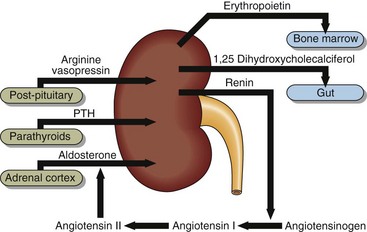 Biological principles in action; 2 Learning Outcomes. Kidney damage for 3 months, as defined by structural or functional abnormalities of the kidney, with ou without decreased GFR, manifest by either :-Markers of kidney damage, such as proteinuria, abnormal urinary sediment, or abnormalities in imaging tests 2. Kidneys produce several hormones that regulate blood pressure, which is essential for kidney function. Let us take a look at the kidney diagram. Regulation of osmolarity. The 3.9 7 reviews. Older age Family history of Chronic Kidney disease (CKD) Decreased renal mass Regulation of Daily Water Input.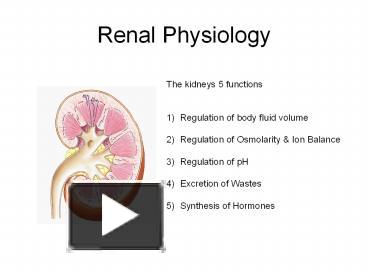
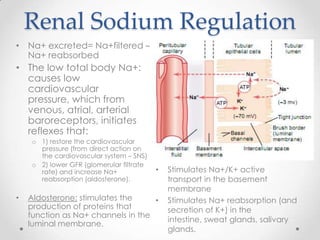 1. 1. 3. The right kidney is generally Blood pressure by regulating blood volume. Overview of The Kidney and Body Fluids Introduction The maintenance of volume and a stable composition of body fluids is essential for homeostasis The kidneys are key players that control many functions Overall regulation of body fluid volume Regulation of the constituents of extracellular fluid The remainder of water output must be balanced by drinking fluids and eating solid foods. D. In addition to their important role in gluconeogenesis, the kidneys contribute to glucose homeostasis by filtering and reabsorbing glucose. The nephrons in the kidneys are supplied with a dense network of blood vessels, and high volumes of blood flow through them. Filtering blood is the primary function of the kidney. The kidneys work to ensure an adequate quantity of plasma to keep blood flowing to vital organs. ; Reduced perfusion pressure in the kidney detected by Stage 3a & 3b CKD: Mild to severe loss of kidney function, eGFR 30-59.
  Fig.
Fig. 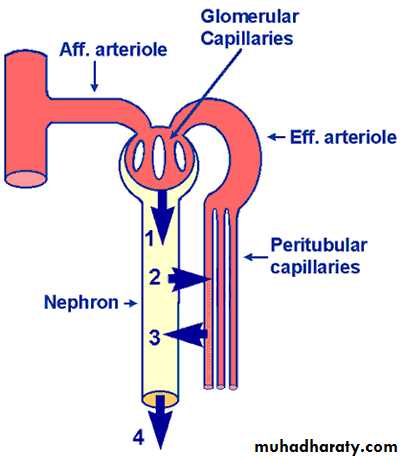 Times New Roman Arial Calibri Notebook 1_Notebook Excretory System Why is excretion necessary? This topic will provide an overview of the issues concerning assessment of the GFR in the patient with chronic kidney disease (CKD). It is produced in the lungs but binds to the surfaces of endothelial cells in the afferent arterioles and glomerulus. Fig. Dialysis: how and why? In the brain, clusters of neuron cell bodies are called nuclei. Over time, high blood pressure harms renal blood vessels.
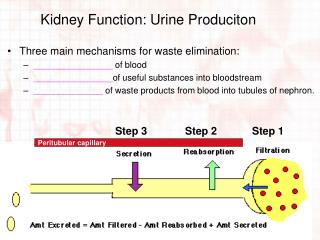 Label structures of the urinary system. Transport of Urea, Open in a separate window.
  A kidney figure is given below that explains the anatomy of a mammalian kidney [Image will be Uploaded Soon] Functions of the Kidney . There are motor neurons, sensory neurons, interneurons and ganglionic neurons. The kidney plays a central role in the regulation of arterial blood pressure. View Renal functions test.ppt from ECON 002 at Gujarat Technological University. What are the clinical qualities we associate with urine? Gillies et al. Functions of the kidney Regulation e.g. Kidney Transplant Peritoneal Dialysis Comfort Care There are essentially three options to a patient facing ESRD: 1- Dialysis 2- Transplantation, which has been clearly shown to be the best treatment option 3- or no renal replacement therapy leading to a certain death over time (an average of 10 to 90 days). This mechanism works in the afferent arteriole that supplies the glomerulus. Creative Commons "Sharealike" Reviews. endocrine functions kidneys have primary endocrine function since they produce hormones in addition, the kidneys are site of degradation for hormones such as insulin and aldosterone.
  Regulation of extracellular fluid volume. Estimated Glomerular Filtration Rate (eGFR) MDRD equation GFR (mL/min/1.73 m2) = 175 x (S Cr)-1.154 x (age)-0.203 x 0.742 x 1.210 The 3-AR is expressed in most of the nephron segments that also express Diuretic phase. function. Regulation of homeostasis Electrolytes Water Acid-base balance Remove waste and toxins from the body Filtration and excretion Secretion increases as kidney function decreases . function of kidney. How do diuretics work?
  However, the GFR provides no information on the cause of the kidney disease. At present, about 95% of kidneys grafted from a living donor related to the recip-ient function for 1 year; about 90% of kidneys from cadaver donors function for 1 year.
  1. They act to stimulate or inhibit blood flow. Waste Products Removal of Ammonia The Job of the Kidneys Regulation of Water Levels The Hard-working Kidneys PowerPoint Presentation The Kidney Formation of Urine Factors that affect kidney function Summary When good organs go bad Total-body potassium (K+) content and appropriate distribution of K+ across the cell membrane is vitally important for normal cellular function. 26-3. neuromuscular function) and are also needed for skeletal mineralization. Therefore, kidney ischemia is dictated by regulation of both metabolic supply and demand, and the regulatory factors may be similar hormonal/metabolic systems, which greatly simplifies these biologic processes. This process is handled by the urinary excretory system, of which the kidneys are the main organs. Low body fat stimulates leptin production, which stimulates appetite. Subject: Biology. Kidney Structure. Renal system By: Ruby zapien, Zulema Vazquez, Sabrina Montano Per. Several problems complicate kidney transplantation. Previous | Index | Next. Kidneys are important because they keep the rest of your bodys systems in balance. As you age, your kidneys and bladder change. Remember that GFR uses a standard 70kg patient with normal muscle and so it is not as precise as we tell patients. Kidneys produce several hormones that regulate blood pressure, which is essential for kidney function. Interference with ability to filter blood. A classic nephrology reference for over 25years, Seldin and Giebischs The Kidney, is the acknowledged authority on renal physiology and pathophysiology.
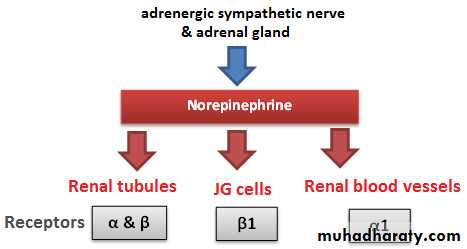
 Illustrate the macroscopic and microscopic structures of the kidney. * Acute kidney injury network. Acid-base homeostasis and pH regulation are critical for both normal physiology and cell metabolism and function. The lungs are important for excretion of carbon dioxide (the respiratory acid) and there is a huge amount of this to be excreted: at least 12,000 To date, the study of the sympathetic regulation of renal function has been restricted to the important contribution of 1- and 2-adrenergic receptors (ARs). Calcium and phosphate are critical to human physiology (e.g. (Refer to Dr. Arbour's ppt slide 18 (summary of neurohormonal control of GFR and renal blood flow) A normal BUN level is between 7 and 20. A large body of experimental and physiological evidence indicates that renal control of extracellular volume and renal perfusion pressure are closely involved in maintaining the arterial circulation and blood pressure. The kidneys have two main ways to maintain acid-base balance - their cells reabsorb bicarbonate HCO3 from the urine back to the blood and they secrete hydrogen H+ ions into the urine.