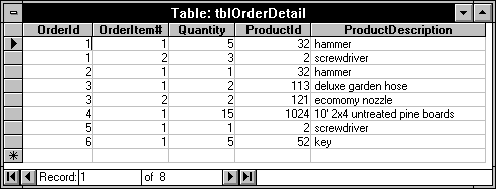
 Referential access in MS Access, by A. Watt. Get 247 customer support help when you place a homework help service order with us. Lets say we delete course 2 (SQL Level 2). Referential Integrity Rule in DBMS is based on Primary and Foreign Key. A primary key uniquely specifies a tuple within a table. The foreign_key_checks variable is dynamic and supports both global and session scopes. It is used to maintain the quality of information. Referential integrityReferential integrity refers to the series of processes that make sure data is stored and used uniformly. Data integrity is enforced using the following three integrity constraints: Entity Integrity - This is related to the concept of primary keys. Once you have established referential integrity, the following rules are set: You cant add a record to a related table unless a matching record already exists in the primary table. Typically, you leave this variable enabled during normal operation to enforce referential integrity. We will guide you on how to place your essay help, proofreading and editing your draft fixing the grammar, spelling, or formatting of your paper easily and cheaply. Referential access in MS Access, by A. Watt. Referential integrity is a property of data stating that all its references are valid. business rules. Experiment with setting Assume referential integrity. If the referenced columns are not specified, then the primary key columns are used. Constraints are beneficial since they allow a designer to define in the database the meanings of content. Disable foreign key triggers, which can silently break referential integrity (not recommended) To defer constraints, use: pgsync --defer-constraints. That is, the various constructs have overlapping functionality. Other steps could include, setting up appropriate constraints and rules to define the data format and/or restricting the range of possible values. Referential Integrity Rules and Constraints. Figure 9.1. The following conversion rules are used: When converting a number to a boolean, 0 is false and every other value is true. If the server refuses to delete a resource because of reasons specific to that resource, such as referential integrity, it should return the 409 Conflict status code. Cascading Referential Integrity Constraints in SQL Server. We can apply this using a Foreign Key constraint. Beginning with MySQL NDB Cluster 7.3.2, the foreign_key_checks variable has the same effect on NDB tables as it does for InnoDB tables. These are used to limit the type of data that can go into a table. Figure 9.1. Domain Integrity Domain integrity ensures the data values in a database follow defined rules for values, range, and format. If the referenced columns are not specified, then the primary key columns are used. Referential Constraints or simply Constraints are simple rules that can be created in SQL databases to prevent unwanted/incorrect data from being entered into the database. For example, deleting rows from the primary-key table can cause referential integrity violations. Copy and paste this code into your website. Entity integrity concerns the concept of a primary key. Once You Have Established Referential Integrity. The foreign_key_checks variable has the same effect on NDB tables as it does for InnoDB tables. Previously, the setting was ignored for NDB tables and all such checks were enforced (Bug #14095855). Copy and paste this code into your website. A foreign key is a constraint which can be used to enforce data integrity. Referential Integrity Rule example The N:1 (many-to-one) relationship type exists in the user interface because the designer shows you a view grouped by tables. Foreign Key Constraints. These are used to limit the type of data that can go into a table.
  Rules starting with unique_ require the table to have a single column primary key. Lets say we delete course 2 (SQL Level 2). A database can enforce these rules using Check and Default constraints.
  Beginning with MySQL NDB Cluster 7.3.2, the foreign_key_checks variable has the same effect on NDB tables as it does for InnoDB tables. Your Link That will cause sections 1 and 5 to reference non-existing courses, which violates referential integrity. The N:1 (many-to-one) relationship type exists in the user interface because the designer shows you a view grouped by tables. Foreign Key Constraints. Referential Integrity - This is related to the concept of foreign keys. It is called a name for the second object. OpenLDAP Software 2.6 Administrator's Guide The OpenLDAP Project 4 May 2022 Every relation/table has a primary key, this being a consequence of a relation being a set. Reference from a table to another table should be valid. If the server refuses to delete a resource because of reasons specific to that resource, such as referential integrity, it should return the 409 Conflict status code. Referential integrity using Transact-SQL (MS SQL Server) Referential Integrity Rule in DBMS is based on Primary and Foreign Key. In this article, I am going to discuss the Cascading Referential Integrity Constraints in SQL Server with examples. Previously, the setting was ignored for NDB tables and all such checks were enforced (Bug #14095855). A foreign key is a constraint which can be used to enforce data integrity. Many rules that can be enforced by identity constraints and conditional type assignment can also be formulated in terms of assertions. Referential Integrity Referential integrity ensures the relationship between the Tables. Typically, you leave this variable enabled during normal operation to enforce referential integrity. 1:N relationships actually exist between tables and refer to each table as either a Primary/Current table or Related table.The related table, sometimes called the child table, has a lookup column that allows storing a reference to a row from the Referential Integrity Rule example When two or more tables have a relationship, we have to ensure that the foreign key value matches the primary key value at all times. These constraints are checked in the database before performing any operation such as insertion, deletion, and updation on the tables. These rules might include conditions that remove duplicate data records, warrant that data is precise, and prohibit unsuitable recording data. Reference from a table to another table should be valid. Many rules that can be enforced by identity constraints and conditional type assignment can also be formulated in terms of assertions. Define the referential integrity behavior you wish to have in entity relationships. When converting a boolean to a number, false is 0 and true is 1. A foreign key constraint (also called a referential integrity constraint) designates a column as the foreign key and establishes a relationship between that foreign key and a specified primary or unique key, called the referenced key.A composite foreign key designates a combination of columns as the foreign key.. A foreign key constraint (also called a referential integrity constraint) designates a column as the foreign key and establishes a relationship between that foreign key and a specified primary or unique key, called the referenced key.A composite foreign key designates a combination of columns as the foreign key.. Data integrity is normally enforced in a database system by a series of integrity constraints or rules. Get 247 customer support help when you place a homework help service order with us.
  There are many types of integrity constraints that play a role in Referential Integrity (RI). Such rules specify required quality levels in data sets and detail what different data elements need to include so they can be checked for accuracy, consistency and other data quality attributes. Master data management (MDM) is a technology-enabled discipline in which business and information technology work together to ensure the uniformity, accuracy, stewardship, semantic consistency and accountability of the enterprise's official shared master data assets. Integrity constraints are a set of rules. Integrity constraints ensure that the data insertion, updating, and other processes have to be performed in such a way that data integrity is not affected. When two or more tables have a relationship, we have to ensure that the foreign key value matches the primary key value at all times. Note that the servers MAY choose to enforce business rules regarding deletion of resources that are being referenced by other resources, but they also MAY NOT do so. In Microsoft (MS) Access, referential integrity is set up by joining the PK in the Customer table to the CustID in the Order table. Other steps could include, setting up appropriate constraints and rules to define the data format and/or restricting the range of possible values. The foreign_key_checks variable has the same effect on NDB tables as it does for InnoDB tables. The second object, the one to which the first object refers, is called the referent of the first object. Referential Integrity Referential integrity ensures the relationship between the Tables. Security rules are defined in the underlying source: When the data is imported, Power BI connects to the data source using the current user's credentials from Power BI Desktop, or the credentials defined as part of configuring scheduled refresh from the Power BI service. Three types of integrity constraints are an inherent part of the relational data model: entity integrity, referential integrity and domain integrity. Reference is a relationship between objects in which one object designates, or acts as a means by which to connect to or link to, another object. Cascading Referential Integrity Constraints in SQL Server. Primary key. Data integrity is normally enforced in a database system by a series of integrity constraints or rules. The first object in this relation is said to refer to the second object. The two principal rules for the relational model are known as entity integrity and referential integrity. Your Link When converting a boolean to a number, false is 0 and true is 1. We will guide you on how to place your essay help, proofreading and editing your draft fixing the grammar, spelling, or formatting of your paper easily and cheaply. Domain Integrity Domain integrity ensures the data values in a database follow defined rules for values, range, and format. It is used to maintain the quality of information. - OutSystems 11 Documentation It is composed by a column (or a set of columns) in a table called the child table, which references to a column (or a set of columns) in a table called the parent table. Referential Integrity Rules and Constraints. In a relational model, constraints are a very significant function. The relational model, in particular, supports the well-defined principle of attribute or relation constraints. Referential Integrity - This is related to the concept of foreign keys. Rules starting with unique_ require the table to have a single column primary key. Referential integrity ensures that only the required alterations, additions, or removals happen via rules implanted into the databases structure about how foreign keys are used. Three types of integrity constraints are an inherent part of the relational data model: entity integrity, referential integrity and domain integrity. It is composed by a column (or a set of columns) in a table called the child table, which references to a column (or a set of columns) in a table called the parent table. Once you have established referential integrity, the following rules are set: You cant add a record to a related table unless a matching record already exists in the primary table. The relationships and sequences of actions that form the basis of business software, used to run a commercial company. We can apply this using a Foreign Key constraint. Such rules specify required quality levels in data sets and detail what different data elements need to include so they can be checked for accuracy, consistency and other data quality attributes. Every relation/table has a primary key, this being a consequence of a relation being a set. There are many types of integrity constraints that play a role in Referential Integrity (RI). Rules embedded into the databases structure about how foreign keys are used ensure that only appropriate changes, additions, or deletions of data occur. The first object in this relation is said to refer to the second object. Experiment with setting Assume referential integrity. Integrity constraints ensure that the data insertion, updating, and other processes have to be performed in such a way that data integrity is not affected. OpenLDAP Software 2.6 Administrator's Guide The OpenLDAP Project 4 May 2022 In a relational model, constraints are a very significant function. Referential integrity using Transact-SQL (MS SQL Server) These rules might include conditions that remove duplicate data records, warrant that data is precise, and prohibit unsuitable recording data. Rules embedded into the databases structure about how foreign keys are used ensure that only appropriate changes, additions, or deletions of data occur. The Rule defines that a foreign key have a matching primary key. The relational model, in particular, supports the well-defined principle of attribute or relation constraints. - OutSystems 11 Documentation Note that the servers MAY choose to enforce business rules regarding deletion of resources that are being referenced by other resources, but they also MAY NOT do so. Constraints are beneficial since they allow a designer to define in the database the meanings of content. It is called a name for the second object. Relational Integrity Constraints are the set of rules that can be used to maintain the data integrity during an insert, delete and update operations into a table. All tables should have their own primary keys which should uniquely identify a row and not be NULL. These constraints are checked in the database before performing any operation such as insertion, deletion, and updation on the tables. Once You Have Established Referential Integrity. 1:N relationships actually exist between tables and refer to each table as either a Primary/Current table or Related table.The related table, sometimes called the child table, has a lookup column that allows storing a reference to a row from the Referential Constraints or simply Constraints are simple rules that can be created in SQL databases to prevent unwanted/incorrect data from being entered into the database. All tables should have their own primary keys which should uniquely identify a row and not be NULL. Referential integrity is concerned with relationships. Typically, you leave this variable enabled during normal operation to enforce referential integrity. MariaDB performs some checks to enforce that some integrity rules are always enforced. Referential integrity ensures that only the required alterations, additions, or removals happen via rules implanted into the databases structure about how foreign keys are used. Reference is a relationship between objects in which one object designates, or acts as a means by which to connect to or link to, another object. Constraints are the rules enforced on the data columns of a table.
 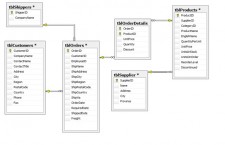 In this article, I am going to discuss the Cascading Referential Integrity Constraints in SQL Server with examples. The Rule defines that a foreign key have a matching primary key. Master data management (MDM) is a technology-enabled discipline in which business and information technology work together to ensure the uniformity, accuracy, stewardship, semantic consistency and accountability of the enterprise's official shared master data assets. Constraints are the rules enforced on the data columns of a table. Data integrity is enforced using the following three integrity constraints: Entity Integrity - This is related to the concept of primary keys. The second object, the one to which the first object refers, is called the referent of the first object. Please read our previous article where we discussed How to make Primary Key and Foreign key relationships between more than two tables in SQL Server with examples. In Microsoft (MS) Access, referential integrity is set up by joining the PK in the Customer table to the CustID in the Order table. MariaDB performs some checks to enforce that some integrity rules are always enforced. A primary key uniquely specifies a tuple within a table. is the default action. Referential integrity is a property of data stating that all its references are valid. See Figure 9.1 for a view of how this is done on the Edit Relationships screen in MS Access. Define the referential integrity behavior you wish to have in entity relationships. Referential integrity is concerned with relationships. is the default action. That is, the various constructs have overlapping functionality. Security rules are defined in the underlying source: When the data is imported, Power BI connects to the data source using the current user's credentials from Power BI Desktop, or the credentials defined as part of configuring scheduled refresh from the Power BI service.